Thursday, November 19, 2009

"Mother China" Music Video now is on CNN


Sea turtles (haigui) return to China with a music video


Everything is a pun in China and overseas Chinese aren’t exempt from the language exercise. Called haigui (海归 or 海龟, sea turtle which has the same pronunciation), ethnic Chinese's successes, fears and experiences upon returning to China after a time abroad, has been documented over the past few decades.

Now a recent video made by Reno Studios with a song by two haigui living in the U.S. has caught on online. ChinaSMACK explains that, “The song is based on the writers’ real story of returning to China, with a complexity of excitement and frustration, optimism and disappointment, hope and hopeless.”

Here’s the translation of the song, and as ChinaSMACK points out, 妈呀 (Mother) is a pun that can be used for surprise, excitement or frustration -- much like the haigui writers' journey.

Thursday, October 15, 2009

妈呀,中国 - 视觉加强修订第三版


本视频为修订三版,对个别图片作了微量调整。

This is the vision enhance version of "Mother, China". Hope you all like it.。

作为一个旅加华人,这首原创歌曲说出了我10年海外生活的心声,我相信,也说出了在北 美和世界各地海外华人的心声。

歌词:
(T) - Timothy
(F) - 我爱微风
(C) - 合唱

(music)

(T)我生在新中国,我长在红旗下
(F)我带过红领巾,我爱国如爱家
(T)十年寒窗苦,我好不容易进清华
(F)我成绩不算差,(C)可我户口落不下

(F)阴差又阳错,我出国象出家
(T)为了养家糊口,我得赶紧办绿卡
(F)出国护照难拿,回国却偏要VISA
(C)入了外国籍,但我做梦都说中国话

(T)我的大中国,(F)我的大华夏
(T)尽管我在外飘泊,(F)总是把你牵挂
(T)我的大中国,(F)我的大华夏
(C)风里雨里同度过,我只认你这个妈

(F)我曾经爱闯荡,现在却很想家
(T)爸爸已经去世,家里就剩妈妈
(F)我很想做海归,怕你嫌我年纪大
(T)可是你看那谁,他八十二能娶二十八

(music)

(T)在国外住得越久,我心里就越放不下
(F)好不容易请了假,我兴冲冲地飞回家 (T)北京欢迎你
(T)看着立交桥发傻,我迷失在高楼大厦
(F)江河流着黑水,天空下着黄沙 (T)妈呀,这也算是晴天啊

(T)老同学一见面,感觉亲如一家 (F)哥们,喝酒!
(F)可陌生人对我,有时冷眼有时骂 (T)嘿!你长不长眼啊
(T)车比纽约还多,路比伦敦要大 (F)那当然
(F)到处奔驰宝马,坐进去那真叫害怕 (F)找死啊你!

(C)不管怎么样,是你把我养大
即使跑遍了全世界,也忘不了这个家
只希望你更好,原谅我有时乱说话
儿女发点牢骚,当妈的根本不用怕


感谢旅美华人:我爱微风&Timothy的音乐原创。
作为一个旅加华人,这首原创歌曲说出了我10年海外生活的心声,我相信,也说出了在北 美和世界各地海外华人的心声。

Sunday, January 25, 2009

Beijing Welcome You

北京欢迎歌词
词:林夕 曲:小柯 制作:陈少琪 小柯 余秉翰
片头:日出、捏面人、挂风筝、刷年画、太极拳、太庙
迎接另一个晨曦 带来全新空气——陈天佳(正阳门箭楼上,背景为正阳门城楼)
气息改变情味不变 茶香飘满情谊——刘欢(鸟巢)
我家大门常打开 开放怀抱等你——那英(德胜门箭楼,2008年4月13日)
拥抱过就有了默契 你会爱上这里——孙燕姿(北海公园白塔,2008年4月2日)
不管远近都是客人请不用客气——孙悦(普渡寺,2008年4月7日)
相约好了在一起 我们欢迎你——王力宏(中华世纪坛、书法,2008年3月20日)
我家种着万年青 开放每段传奇——韩红(北京大学未名湖畔博雅塔)
为传统的土壤播种 为你留下回忆——周华健(太庙,2008年4月8日)
陌生熟悉都是客人请不用拘礼——梁咏琪(国子监琉璃牌坊)
第几次来没关系 有太多话题——羽泉(皮影戏)
北京欢迎你 为你开天辟地——成龙(八达岭长城,2008年4月3日)
流动中的魅力充满着朝气——任贤齐(琉璃厂北京画店、折扇)
北京欢迎你 在太阳下分享呼吸——蔡依林(奥林匹克水上公园)
在黄土地刷新成绩——孙楠(国家大剧院)
我家大门常打开 开怀容纳天地——周笔畅(水立方)
岁月绽放青春笑容 迎接这个日期——韦唯(糊风筝)
天大地大都是朋友请不用客气——黄晓明(奥林匹克水上公园,2008年4月13日)
画意诗情带笑意 只为等待你——韩庚(画京剧脸谱)
北京欢迎你 像音乐感动你——汪峰(古观象台)
让我们都加油去超越自己——莫文蔚(社稷坛(中山公园)五色土)
北京欢迎你 有梦想谁都了不起——谭晶(四合院模型)
有勇气就会有奇迹——陈奕迅(天坛坛门)
北京欢迎你 为你开天辟地——阎维文(五棵松体育馆)
流动中的魅力充满着朝气——戴玉强(北京孔庙大成门)
北京欢迎你 在太阳下分享呼吸——王霞 李双松(什刹海荷花市场)
在黄土地刷新成绩——廖昌永(首都博物馆)
北京欢迎你 像音乐感动你——林依轮(茶道)
让我们都加油去超越自己——张娜拉(鼓楼上,背景为钟楼)
北京欢迎你 有梦想谁都了不起——林俊杰(湖广会馆大戏楼)
有勇气就会有奇迹——阿杜(湖广会馆大戏楼)
京剧:北京欢迎你,啊啊啊霍霍霍哈哈哈
我家大门常打开 开放怀抱等你——容祖儿(故宫)
拥抱过就有了默契 你会爱上这里——李宇春(火锅)
不管远近都是客人请不用客气——黄大炜(拨浪鼓)
相约好了在一起 我们欢迎你——陈坤(福到)
北京欢迎你 为你开天辟地——谢霆锋(故宫)
流动中的魅力充满着朝气——韩磊
北京欢迎你 在太阳下分享呼吸——徐若瑄(世贸天阶,2008年4月7日)
在黄土地刷新成绩——费翔
片中:长城、天安门、天坛祈年殿、九龙壁、故宫三大殿、抖空竹、长嘴壶茶艺、北京烤鸭、拉面、首都机场、北京城铁、立交桥、体育场馆
我家大门常打开 开怀容纳天地——汤灿(刺绣)
岁月绽放青春笑容 迎接这个日期——林志玲(故宫午门) 张梓琳(包饺子)
天大地大都是朋友请不用客气——张靓颖(剪纸)
画意诗情带笑意 只为等待你——许茹芸(浇花) 伍思凯 (瓷器)
北京欢迎你 像音乐感动你——杨坤(画桌前) 范玮琪(中央电视塔)
让我们都加油去超越自己——游鸿明 腾格尔 黄大炜 满文军 纪敏佳(老北京四合院)周晓欧(书法)
北京欢迎你 有梦想谁都了不起——沙宝亮(瓷器)
有勇气就会有奇迹——金海心 何润东(中央电视塔)
北京欢迎你 为你开天辟地——飞儿(北海公园五龙亭) 庞龙
流动中的魅力充满着朝气——李玉刚(国家体育馆)吴克群(老北京四合院)
北京欢迎你 在太阳下分享呼吸——5566(白塔寺) 胡彦斌 (老北京四合院)
在黄土地刷新成绩——刀郎(老北京四合院)
北京欢迎你 像音乐感动你——纪敏佳 屠洪刚 吴彤(老北京四合院)
让我们都加油去超越自己——郭容 刘耕宏(老北京四合院)
北京欢迎你 有梦想谁都了不起——金莎 苏醒 韦嘉(老北京四合院)
有勇气就会有奇迹——付丽珊 黄征 房祖名(老北京四合院)
北京欢迎你 有梦想谁都了不起——全体群唱
有勇气就会有奇迹——全体群唱
北京欢迎你 有梦想谁都了不起——全体群唱
有勇气就会有奇迹——全体群唱

Friday, January 16, 2009

Agile Analysis

http://www.agilemodeling.com/essays/agileAnalysis.htm

Agile Analysis

1. What is Analysis?
The purpose of analysis is to understand what will be built, why it should be built, how much it will likely cost to build (estimation), and in what order it should be built (prioritization). This is similar to requirements elicitation, the purpose of which is to determine what your users want to have built. The main difference is that the focus of requirements gathering is on understanding your users and their potential usage of the system, whereas the focus of analysis shifts to understanding the system itself and exploring the details of the problem domain. Another way to look at analysis is that it represents the middle ground between requirements and design, the process by which your mindset shifts from what needs to be built to how it will be built.

2. What is Agile Analysis?
Let’s begin by describing what agile analysis isn’t:
It isn’t a phase in the lifecycle of your project
It isn’t a task on your project schedule
It isn’t a means unto itself
What is agile analysis? From the previous discussion of what an agile business system analyst does, your agile analysis efforts should exhibit the following traits:
Agile analysis should be communication rich. Agile developers prefer warm communication techniques such as face-to-face discussion and video conferencing over cold techniques such as documentation and email, as described in the Communication article. Agile developers prefer to work as closely as possible to their project stakeholders, following AM’s Active Stakeholder Participation practice wherever possible.
Agile analysis is highly iterative. As Martin (2002) points out analysis and design activities both rely on each other: estimating is part of analysis yet that relies on some design being performed to identify how something could be implemented and your design efforts rely on sufficient analysis being performed to define what needs to be built. Hence analysis is iterative.
Agile analysis is incremental. Martin (2002) also correctly points out that agile analysis is incremental, that you don’t need to build systems all in one go. This philosophy supports the incremental approach favored by common agile software processes where the work is broken done into small, achievable “chunks” of functionality. These chunks should be implementable within a short period of time, often as little as hours or days.
Agile analysis explores and illuminates the problem space. Your primary goal is to identify and understand what your project stakeholders need of your system. Furthermore, this information needs to be communicated to everyone involved with the project, including both developers and stakeholders. This promotes understanding of, and agreement with, the overall vision of your project.
Agile analysis includes estimation and prioritization of requirements. It is during estimation and prioritization of requirements where software development becomes “real” for project stakeholders. It is very easy to say that you want something but much hard to agree to a price for it, let alone to trade it off for something that is immediately more important to you.
Agile analysis results in artifacts that are just good enough. If any artifacts are created at all as the result of your agile analysis (you’ll be following the AM practice Discard Temporary Models after all) they should be either agile models or agile documents. Such artifacts are typically far from perfect, they just barely fulfill their purpose and no more.
Here is my definition for agile analysis:
Agile analysis is highly evolutionary and collaborative process where developers and project stakeholders actively work together on a just-in-time (JIT) basis to understand the domain, to identify what needs to be built, to estimate that functionality, to prioritize the functionality, and in the process optionally producing artifacts that are just barely good enough.

3. Analysis Through the Lifecycle
Figure 1 depicts the lifecycle of Agile Model Driven Development (AMDD). During "iteration 0", the first iteration of an agile project, you need to get your project organized and going in the right direction. Part of that effort is the initial envisioning of the requirements and the architecture so that you are able to answer critical questions about the scope, cost, schedule, and technical strategy of your project. Details about the business domain are identified on a just-in-time (JIT) basis during iterations via initial iteration modeling at the beginning of each iteration or by modeling storming throughout the iteration. Analysis is so important to agilists that we do it every day.

4. Some Potential Analysis Models
Are the artifacts created taking an agile approach to analysis any different than the ones created as the result of traditional analysis? In a way they are. They are in fact the same types of artifacts, a use case diagram is a use case diagram after all, but the way in which they are created are different. The artifacts are created following the principles and practices of AM, they are just barely good enough and are often discarded so as to travel light.
Table 1 lists common artifacts used during analysis modeling and suggests a simple tool with which you could create such an artifact. It is interesting to note that this list is meant to be representative, a more thorough list is presented in the article Artifacts for Agile Modeling and in the book Agile Modeling.
Table 1. Candidate artifacts for analysis modeling.
Artifact
Simple Tool
Description
Activity Diagram
Whiteboard
UML activity diagrams are used during analysis modeling to explore the logic of a usage scenario (see below), system use case, or the flow of logic of a business process. In many ways activity diagrams are the object-oriented equivalent of flow charts and data-flow diagrams (DFDs).
Class Diagram
Whiteboard
Class diagrams show the classes of the system, their inter-relationships (including inheritance, aggregation, and association), and the operations and attributes of the classes. During analysis you can use class diagrams to represent your conceptual model which depict your detailed understanding of the problem space for your system.
Constraint definition
Index card
A constraint is a restriction on the degree of freedom you have in providing a solution. Constraints are effectively global requirements for your project.
CRC model
Index cards
A Class Responsibility Collaborator (CRC) model is a collection of standard index cards, each of which have been divided into three sections, indicating the name of the class, the responsibilities of the class, and the collaborators of the class. Like class diagrams, CRC models are used during analysis modeling for conceptual modeling.
Data flow diagram (DFD)
Whiteboard
A data-flow diagram (DFD) shows the movement of data within a system between processes, entities, and data stores. When analysis modeling a DFD can be used to model the existing and/or proposed business processes that your system will support.
Entity/Relationship (E/R) diagram (data diagram)
Whiteboard
E/R diagrams show the main entities, their data attributes, and the relationships between those entities. Like class diagrams E/R diagrams can be used for conceptual modeling, in many ways E/R diagrams can be thought of as a subset of class diagrams.
Flow chart
Whiteboard
Flow charts are used in a similar manner to activity diagrams.
Robustness diagrams
Whiteboard
Robustness diagrams can be used to analyze usage scenarios to identify candidate classes and major user interface elements (screens, reports, ...).
Sequence diagram
Whiteboard
Sequence diagrams are used to model the logic of usage scenarios. Sequence diagrams model the flow of logic within your system in a visual manner, enabling you to both explore and validate your logic.
State chart diagram
Whiteboard
State chart diagrams depict the various states, and the transitions between those states, that an entity exhibits. During analysis modeling state chart diagrams are used to explore the lifecycle of an entity that exhibits complex behavior.
System use case
Paper
A use case is a sequence of actions that provide a measurable value to an actor. A system use case includes high-level implementation decisions in it. For example, a system use case will refer to specific user interface components – such as screens, HTML pages, or reports. System use cases will also reflect fundamental architectural decisions, such as the use of ATMs versus cell phones to access your bank account.
UI prototype
Whiteboard
A user interface (UI) prototype models the user interface of your system. As a part of analysis modeling it enables you to explore the problem space that your system addresses in a manner that your project stakeholders understand. Remember, the user interface is the system to most people.
Usage scenario
Index card
A usage scenario is exactly what its name indicates – the description of a potential way that your system is used.
Use case diagram
Whiteboard
The use-case diagram depicts a collection of use cases, actors, their associations, and optionally a system boundary box. When analysis modeling a use case diagram can be used to depict the business functionality, at a high-level, that your system will support. It can also be used to depict the scope of the various releases of your system via the use of color or system boundary boxes.

5. Rethinking the Role of Analysts
Analysis is a very important activity on any software development project, regardless of paradigm. It is an organizational design decision to define what roles you will have and what those roles will do. In traditional development there is often someone(s) in the role of analyst, and some organizations even choose to distinguish between analyst types and will have system analysts (SAs), business analysts (BAs), business system analysts (BSAs), data analysts, process analysts, and so on. In agile development we make different organizational design decisions. So, although we still perform analysis we haven't made the decision to have someone in that specific role.
If you are an existing BA, here are a few strategies which you may want to consider when moving to agile software development:
Recognize that agile teams are made up of generalizing specialists instead of specialists (such as analysts). Your analysis skills are valuable, and are clearly a good start, but you need to be able to do more. Be prepared to work closely with other team members to help transfer your skills to them and to pick up new skills from them.
A business analyst, particularly one from the business side, may take on the role of stakeholder/customer/product owner on an agile project, representing the stakeholder community throughout the project (see Figure 2). They may also lead an initial requirements envisioning effort during Iteration 0.
For more details, see the article Rethinking the Role of Business Analysts.


6. Conclusion
The nature of analysis has changed. Several decades ago analysis was seen as a transformational process within a serial project lifecycle. With the rising popularity of object-orientation in the 1980s and 1990s analysis was soon seen as part of an iterative and incremental process, and in the new millennia the nature of analysis is transforming once again. Today analysis is better envisioned as a highly collaborative, iterative, and incremental endeavor involving both developers and stakeholders. The evolution of the analysis process necessitates an evolution in the way that business system analysts (BSAs) work, and in many situations this role arguably disappears in favor of developers who are generalizing specialists.

7. Acknowledgements
I’d like to acknowledge the input on the Agile Modeling mailing list of the following people: James Bielak, Adam Geras, Ron Jeffries, Kent J. McDonald, Les Munday, Paul Oldfield, Stephen Palmer, Tom Pardee, Dave Rooney, Gabriel Tanase, and Paul Tiseo.

8. Recommended Resources
Active Stakeholder Participation
Agile Business Analysis (Interview with ModernAnalyst)
Agile Requirements
Agile Requirements Best Practices
Agile Requirements Change Management
Agile Software Development and Business Analysis (Requirements Network, membership required)
Best Practices for Agile/Lean Documentation
Comparing the Various Approaches to Modeling in Software Development
Development Phases Examined: Why Requirements, Analysis and Design No Longer Make Sense
Document Late: An Agile Best Practice
Examining the "Big Requirements Up Front (BRUF)" Approach
The "Flexible Features Split" Pattern
Inclusive Models
Initial High-Level Architectural Envisioning
Initial High-Level Requirements Envisioning
Iteration Modeling
Is the BA an Endangered Species With The Growth of Agile? (Craig Brown)
Model a Bit Ahead
The "One Truth Above All Else" Anti-Pattern
Overcoming Common Requirements Modeling Challenges
Prioritized Requirements: An Agile Best Practice
Rethinking How You View Requirements Management
Rethinking the Role of Business Analysts

Thursday, January 15, 2009

North American Hockey Classifications

We felt that it was necessary to shed some light on this sometimes confusing subject. The truth is that levelling systems for North American Hockey tend to vary somewhat from state to state, province to province, and from town to town. With that said, PlayYourGame.com is excited to bring to you a general outline of minor hockey classifications throughout North America.

Firstly, dependent on age, there are various age groupings (Peewee, Bantam, Midget, etc.) at work within the minor hockey system. At any given age level (we'll use Midget), there are different calibres of play based upon skill and commitment. Generally speaking, travel teams are tiered by skill and age using the AAA/AA/A classification as well as the Minor/Major classification. In a given city or town, there may be AAA, AA, and A teams. If so, AAA would be the highest calibre, AA the second highest, etc. In many cases, a town's travel team will fall under only one of these classifications (AAA, AA, or A). Quite often, a team's classification will be based upon the town's size and the respective pool of players that they have to draw from. For instance, in a city like Detroit, there are teams at the AAA level, while some of the smaller areas surrounding the city might have teams classified at the AA level. In some cases, a hockey association might have a large enough pool to field a team at all travel levels (AAA, AA, and A). In the end, your own team's classification is probably based upon the pool size that your community has to draw from.

On top of the AAA/AA classifications, many communities also use the Major/Minor classification. In most cases, the Major/Minor classification is used to denote a team made mostly of first or second year players in a given age level. So, at the Midget level, first year Midgets would most likely make up the core of the Minor AAA/AA team, while second year Midget players would make up the core of the Major AAA/AA team. Although this isn't always the case, most players will follow this sort of a path. In some cases, players will play "up" to the major level in hopes of stronger competition. With that said, there aren't always enough teams in a given region to make a league at both the minor and major level, so some associations will field minor and major teams that compete in the same league.

The system that is listed above pertains only to a player's minor hockey career. After a player has played out his years as a midget (or quite possibly a year or two before), a player will make the jump to a higher level of play - junior hockey. Junior hockey is comprised of two major routes, Major Junior (teams of the OHL, WHL, and the QMJHL) and Junior A/B/C. Major Junior is the route most often taken by those hoping to make a quick transition to the NHL and stand a better chance of being a top draft prospect as an 18 year old. On the other hand, Junior A is the route taken by those players that hope to gain a scholarship and play college hockey before going on to the professional ranks. Although many players at the Major Junior level also pursue school, they are not eligible to play in the NCAA, and so the two playing routes have evolved. In the case of Junior A, B, and C, Junior A is the highest calibre with lots of attention from college scouts.

In addition to junior hockey, many players consider prep hockey. Prep hockey in the U.S is second only to the Junior A leagues in producing NCAA players. In fact, many great professional players like Brian Leetch have taken this route. The calibre falls in line closely with that of Junior A and Junior B.

The above is a summary of the level classifications within the game of North American Hockey, if you happen to have a question on hockey level classifications that wasn't answered in this article, be sure to "Ask the Vet".

Friday, January 9, 2009

Computerworld Canada’s Salary Calculator

Check out Computerworld Canada’s 200N Salary Calculator.Access up-to-date information from our 200N IT Salary Survey, including salaries, cash bonuses, and percentage increases over 200N-1.

http://www.itworldcanada.com/salarycalculator/

GST information for Canadian Contractor

GST INFORMATION

Registration
Employees are not required to register for GST self-employed and incorporated independent contractors with annual revenue less than $30,000 may opt to register voluntarily. Self-employed and incorporated independent contractors with annual revenue greater than $30,000 must register for GST. To register, the contractor should contact the local GST office to obtain the appropriate registration form. The toll-free telephone number is 1-800-959-5525.

Filing Requirement
Annual returns may be made if annual revenue is less than $500,000. The GST return must be filed within three months following the reporting year. For sole proprietorships, the year-end is December 31. For incorporated contractors the year can be calendar year or fiscal year. Instalments for GST, however, must be made on a quarterly basis if the previous year's net tax was $1500 or more. A person may also elect to file a GST return monthly or quarterly.

Calculation and Remittance of GST
A contractor who has registered for GST must collect GST at 5% of his/her revenue for services provided. The contractor should keep a record of the GST collected and report on the GST return. At the same time, he/she should also keep a record of the GST paid on business expenses such as travel, legal and accounting fees. The GST paid is to be reported as GST credit on the GST return. The difference between the GST collected and GST paid (credit) will have to be remitted to Canada Revenue Agency (CRA) together with the GST return. Late filing and payments will be subject to interest and penalty.

Contractors with annual revenue not greater than $200,000 may elect to use the "Quick Method". Under this method, the contractor will collect GST at 5%. However, he/she only needs to remit to CRA at 3.3% on the first $30,000 of GST - included revenue and 4.3% on the remaining balance. For example, if his/her revenue is $40,000, the GST collected and remitted are as follows:

Revenue: $40,000
GST collected at 5%: $ 2,000
GST - included revenue: $42,000
Remittance to CRA:

at 3.3% on the first $30,000: $990
at 4.3% on the balance of $12,400: $533
Total Remittance: $1,523

In this example, the contractor collected $2,000 of GST but he/she only has to remit $1,523 to CRA. The contractor has, therefore, gained $877. On the other hand, by electing to use this "Quick Method", the contractor foregoes the option of claiming actual input tax credits for GST paid on expenses. In this example, if the contractor's expenses exceed $14,617 then there will be no monetary advantage. In order to use this method, an election form must be filed with Canada Revenue Agency by the applicable due date. For more information, visit the Canada Revenue Agency site.

DISCLAIMERThe above is an overview of GST. It may not be complete, accurate or relevant to each person. We strongly recommend the contractor seeks professional advice from tax experts.

General Testing Process -- Improved V Model by SLB BGC QA team

General Testing Process -- Improved V Model
Talk about this diagram: Unit test, integration and component test is white box. First you test the little pieces in unit test; then put some pieces together: integration test. Unit, integration, component and system test tend to happen in IT. System and acceptance test is black box.
The traditional V model show that the software testing and analysis can play a role throughout the software development lifecycle, but the weakness is obviously, it also show that the testing is started in coding phase, we think the testing should begin at early requirement phase rather than the coding phase.
Do test planning and development of the spec concurrently: boxes to the left, to indicate this. Plan top down: UAT first, etc. Test execution happens later: boxes to the right, and happens bottom-up. The level of detail needed to generate the test cases flushes out holes in the requirements
Our testing model will be the improved V model – Plan top down, Testing starting at the beginning of the lifecycle with each iterations phase; Happen bottom-up, Test execution happens later.


Thursday, January 8, 2009

V-Shaped Model SDLC

V-Shaped Model - one of the SDLC
Just like the waterfall model, the V-Shaped life cycle is a sequential path of execution of processes. Each phase must be completed before the next phase begins. Testing is emphasized in this model more so than the waterfall model though. The testing procedures are developed early in the life cycle before any coding is done, during each of the phases preceding implementation.
Requirements begin the life cycle model just like the waterfall model. Before development is started, a system test plan is created. The test plan focuses on meeting the functionality specified in the requirements gathering.
The high-level design phase focuses on system architecture and design. An integration test plan is created in this phase as well in order to test the pieces of the software systems ability to work together.
The low-level design phase is where the actual software components are designed, and unit tests are created in this phase as well.
The implementation phase is, again, where all coding takes place. Once coding is complete, the path of execution continues up the right side of the V where the test plans developed earlier are now put to use.

V-Shaped Life Cycle Model
Advantages
Simple and easy to use.
Each phase has specific deliverables.
Higher chance of success over the waterfall model due to the development of test plans early on during the life cycle.
Works well for small projects where requirements are easily understood.

Disadvantages
Very rigid, like the waterfall model.
Little flexibility and adjusting scope is difficult and expensive.
Software is developed during the implementation phase, so no early prototypes of the software are produced.
Model doesn’t provide a clear path for problems found during testing phases.

Wednesday, January 7, 2009

New Way to Blast Fat Without Surgery Looks Promising


New Way to Blast Fat Without Surgery Looks Promising
Procedure That Uses Targeted Ultrasound to Break Down Fat in Clinical Trials in U.S.
By ROGER FORTUNA and JONANN BRADY
Jan. 5, 2009 —


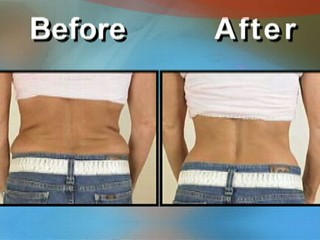
Karen Kinnear has always liked her body, but like many women she had that one problem area that just wouldn't go away, even with a diet and exercise.

"I had the, as they call it, saddlebags. And I was not happy with how it looked," she said.

Kinnear felt liposuction was too invasive, but then she heard about UltraShape, a device that claims to reduce fat with ultrasound.

"It actually breaks down the fat cell and gets rid of the unwanted fat much like liposuction does, except it does it non-invasively, meaning there's no cutting, there's no anesthesia, there's no downtime, there's no recovery," said Dr. Ari Benchetrit, a plastic surgeon in Montreal who has used UltraShape.

It sounds too good to be true, but international studies show that UltraShape reduces fat thickness in common problem areas in just three sessions, and it doesn't harm surrounding skin, blood vessels, nerves or other tissue.

"The clinical trials as well as our own experience has demonstrated an average loss of four to six centimeters in circumference after a three treatment cycle. So that's about two to three inches after the three treatments which is quite considerable," Benchetrit said.

Patients spend a half hour under the UltraShape machine, and the sound waves converge to hit the fat cells under the skin and make them vibrate at a very high speed, causing them to be destroyed. Experts say the fat is then carried to the liver, where it is removed from your body safely. But the procedure is not for everyone.

"This is not a weight loss procedure. This is not for somebody who really needs to lose a lot of weight," Benchetrit said.

In addition, patients need to continue to stay fit and eat right; if not, those problem areas may return. UltraShape is in phase three clinical trials in the United States and doctors here say it could be approved in a few years.

"Patients always obviously want to look and feel better, but if they can do it non-surgically, that's gonna have a real mass appeal," said Dr. Jeffrey M. Kenkel, a plastic surgeon at Southwestern Medical Center.

Kinnear tried UltraShape, and after three treatments, she lost an average of an inch on each thigh.

"My friends actually noticed," she said. "I'm very happy with the results."


Doctor Talks About UltraShape
"Good Morning America" medical contributor Dr. Marie Savard answered some questions people have about the procedure.

Patients have already been traveling to get the procedure in Canada, where it was approved last year, and it's been approved in 50 other countries including Japan and much of Europe since 2005.

More than 50,000 patients have already been treated with UltraShape, and from the studies that have been done, it appears to be extremely safe. There's really no reason to believe that destroying fat cells, which is what this procedure does, would cause any long-term or serious harm to people's bodies. But it must be done by a professional who knows what he's doing. One potential risk is that people could be overtreated, over too large an area and for too long.

The purpose of UltraShape is to decrease body fat in problem areas only, such as saddle bags or love handles. Up to this point, it hasn't been tested on people who have a lot of weight to lose. If it's used on someone who has a lot of fat to lose, it could release too much fat into the body and that could lead to some serious health problems. The fat that's released needs to go somewhere and it would go into the blood and the liver. If there's too much, the liver would get overloaded with fat and that could lead to heart disease and diabetes.

A relatively small amount of fat is released, probably not much more than eating a big fast-food meal, so the fat goes into your liver and is handled by your metabolism. It's excreted and gets repacked into proteins and sugars. Then it gets broken down and burned up as energy.

Experts recommend three treatments for the best results. It's unclear exactly what the procedure would cost, but probably between $400 and $1,000, which is cheaper than liposuction.

UltraShape has been used in liposuction for some time, but as an adjunct to break up fat before it's sucked out. This new machine lets you break up the fat in a way that you don't need to suck it out. It just travels through the body, and if people are eating healthy and working out, as they should be if they're getting this procedure done, the body burns it up.

Find out more at http://www.ultrashape.com/.


Copyright © 2009 ABC News Internet Ventures
Clinics in Canada and Mexico
Change your shape... and your life
The UltraShape procedure is available in 57 countries and over 100,000 patient treatments have been performed worldwide with high patient satisfaction.
Contact a physician in your area today and find out if the UltraShape procedure is right for you.
.

Find a clinic in Canada and Mexico
Thank you for registering with UltraShape.

Clinics in Alberta Canada that offer UltraShape:
Name of Clinic: Laser Rejuvenation Clinic & Spa
Physician: Dr.Janis Campbell, Dr. Tom Woo
10601 Southport Rd SW, #150
Calgary Alberta
CanadaT2W 3M6
Tel: 403-286-6888
Fax: 403-250-5376
Name of Clinic: Aesthetic Institute
Physician: Dr. Mariusz Sapijaszko
#950, 10655 Jasper Ave.
Edmonton Alberta
CanadaT57 3S9
Tel: 780 424 4440
Fax: 789 424 8794

Tuesday, January 6, 2009

NHL 101 Links

http://canucks.nhl.com/team/app/?service=page&page=NHLPage&id=18780


http://sabres.nhl.com/fanzone/hockey101.htm


http://www.njyhl.org/pages/hockey101/101_basics.html

ZT 谈谈冰球中的Fight

之前我和一些别的网友发过关于冰球Fight的视频,有些网友表示不理解为什么在体育运动中这种行为会被允许,或者有些网友只是简单地把它看作两个人“Fight”。其实不然,Fight在冰球里是很有讲究的,是战术需要的, 同时也有很多潜规则在里面。 我在这里给大家稍微介绍一下。

什么样的队员Fight首先大家需要了解的是冰球是一项球员角色分的很细的运动,不是那种分在明面上的那种,什么样的球员碰到一定情况该干什么事,队员们心里都很清楚。 www.6park.com
除了一般的进攻防守外,有一种球员角色是专门用来打架的,可称他们为“全职fighter”。这些球员进攻防守能力都一般,每场3-4个shift,5分钟左右的上场时间,拿着最低的工资(一年80万左右),但却干着“保镖”的工作。他们的宗旨是“打击对手,保护队友”比如Boston的Thornton, Philly的Cote,Montreal的Laraque, Minnesota的Brogaard.

另外一种球员我们可称他们为tough guy, 这些人虽然不是上面那种“全职fighter”,但是也从不拒绝“摘掉手套的”机会。这些球员进攻防守都比“全职fighter”要好很多,对球队的作用也更多面一些。

总之我们在NHL中所能看到的fight, 80% 是以上两种人参与的。

在什么情况下发生Fight1. 自己球队明星球员(需受保护球员)遭到对方agitator (有别于fighter, 我认为agitator是冰球中很有魅力的一种球员类型 )的不断骚扰,或对方球员恶意身体接触。这时你有可能要挺身而出,去fight对方该球员。这是你在给对手传达一种信息,意思是对手的这种行为是不被允许的,是会受到惩罚的。

2. 跟1相反,你去挑衅或恶意攻击对方球员(大多是那种明星球员),遭到对方fighter的挺身而出。

3. 对方球员恶意攻击你,但你有能力fight,是不需要别人罩着你的,那你自己就可以去fight攻击你的人。在加拿大这种能力在培养年轻球员中已经越来越被看中了,从小就培养toughness,从小就知道“you need to protect yourself”。欧洲球员尤其是技术好的欧洲球员这方面欠缺,总需要别人罩着。

4. 全职Figher VS全职Figher提前打好招呼的,哨一响就抱在一起开始打的那种。有时能起到激励全队,扭转momentum的作用,但大多时候是与比赛进程无关的goon show。 www.6park.com
在比赛的什么阶段会发生FightFight 是5分钟major, 其他一般犯规都是2分钟minor。所以你基本上不可能看到无谓的fight,因为打架的人也不是傻子,不可能作伤害球队集体的事情。因此fighter们都会作形势判断,是否将要进行的fight有利于激励本方的势头,或者不影响本方的势头。

如果你方5:0领先philly,比赛还有10分钟结束,也就是进入垃圾时间了,那我敢保证你会看到精彩的如果是报复对本方球员恶意伤害的行为,大多在一个shift内完成。但也要时刻惦记着全队的利益,不是那种脑袋一热抡着拳头就上去了。如果该场比赛没有机会报复了,可以留到下一场碰面的时候。 上个赛季Montreal的Begin弄折了Boston明星球员Savard的一根肋骨,等到这个赛季的季前赛, Boston的fighter一上来就报复了Begin。所以,君子报仇十年不晚。

Fight的潜规则虽然在场上所有人都可能fight,但fight的双方在身价或价值上都是基本对等的。因为fight的两方都被罚5分钟,那就是说如果Brooks和Kobe打架,都罚五分钟,这显然是火箭想看到的。所以这就是为什么每个队的agitator想尽一切办法骚扰对手的明星球员,以求激怒对方,最好的结果是对方明星球员脑袋发热跟你fight,一块对下。 这时就需要前面提到的在什么情况下发生Fight中的第一种情况。明星球员其实也fight,但大多从不掉价,基本上明星球员vs明星球员。这么做自己不掉价,同时也不伤害球队。曾经有过Crosby VS Kovalchuk, Iginla VS Lecvalier, Markov VS Spezza。

举个例子:(主要研究fight的形成原因,这场fight本身很烂,基本上没打起来)黑方:Chara, 波士顿的队长,防守中坚,全NHL最高大的人,在职业生涯初期,从不拒绝对手的邀战,也因此经常伤害球队的利益(他被罚的五分钟对自己球队很重要)。因此是各队的骚扰对象。

白方:Laraque, NHL著名的Heavywieght。全联盟fighter们的楷模,年轻的fighter们以与他打架为荣。

Chara遇到Laraque的邀请欣然接受,因为这不是来自普通fighter的邀请,这是Laraque, 全联盟最有声誉的Fighter之一,自己不掉价。同时最关键的是大家注意以下比分,第一节刚打一半波士顿0:3落后,急需扭转士气,这也是Chara应战的另一个主要原因。我想如果0:0Chara是不是这样做的。


随着Chara对球队的重要性越来越高,以及主教练的千叮咛万嘱咐“谁挑衅你都别和他打”现在已经很少Chara fight了。
最后来个搞笑的


摘了手套还是各罚五分钟
结语:
冰球是一项注重身体接触的运动,同时是讲究心理上intimidate对手的运动,往往随着比赛的深入,越来越physical, 越来越emotional, Fight 看来在所难免。但正像我所说的,fight是应该满足球队战术需要的,fighter们更是从考虑球队利益出发的。同时球迷也喜欢见到fight,这是为什么裁判从不马上阻止“两个人”的fight,裁判和联盟真正禁止的是第三方介入 以及Line Brawl 或 Bench-clearance Brawl。最后一句话;“NHL --- Where Bad Blood Happens”